


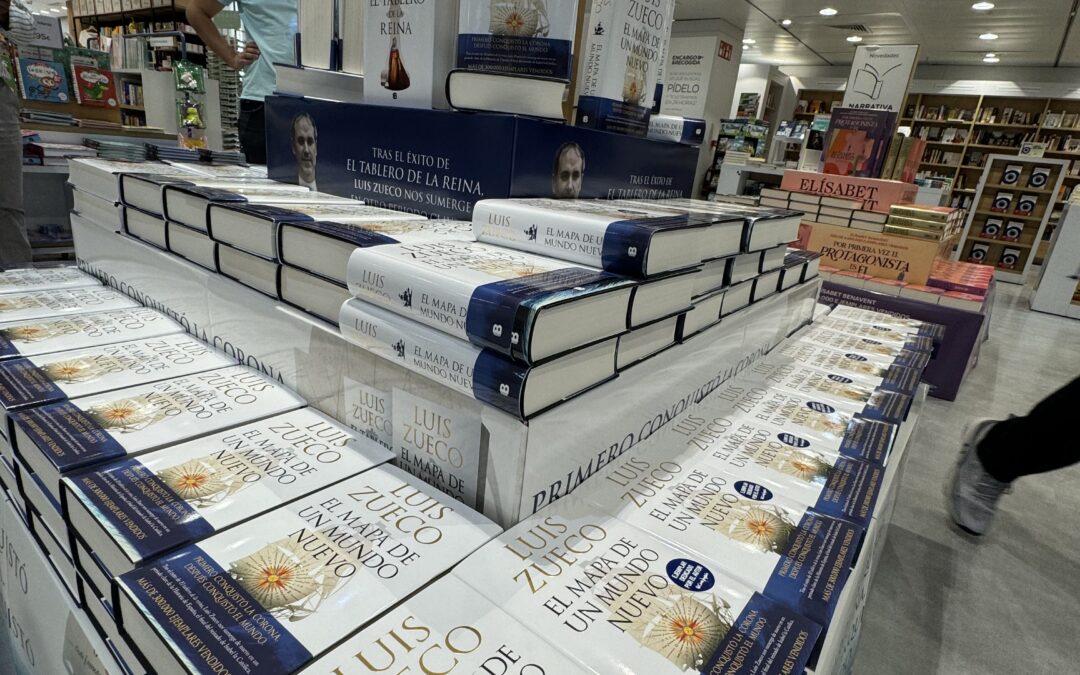
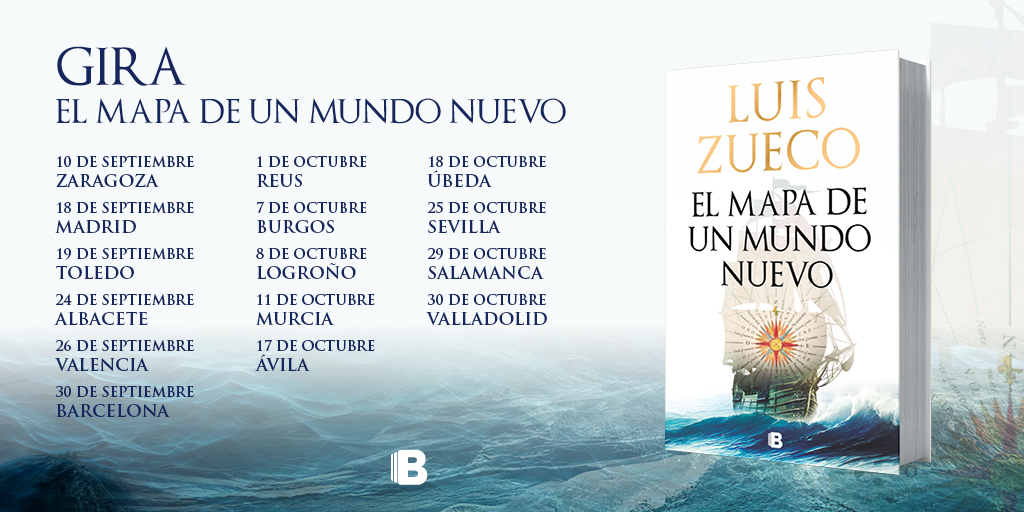
Luis Zueco has just published his new and long awaited novel, and begins a tour with which he will travel around Spain. As many already know, Luis is the director of Castillo de Bulbuente and Castillo de Grisel. After successes such as “El tablero de la reina”, “El Mercader de libros” or “El Castillo”; he publishes “El mapa de un mundo nuevo” (Ediciones B) which comes out today in bookstores.
This novel focuses on how travel has been transforming our world throughout history. It is a tribute to travelers, to travel books and to all those who have wanted to discover what the world was like and tell others about it. It makes us travel to the late fifteenth and early sixteenth centuries, when there is still no notion that America exists, but they are discovering that the world may not be as everyone believed until then.
Isabella the Catholic is a key character, and the plot begins with the wedding of her daughter Juana in Flanders and ends with her death and the attempt of Philip the Fair to seize power and Ferdinand the Catholic to prevent it. It addresses, among other issues, the attempt of the Catholic Monarchs to create a plan of marriage alliances and strategic moves to make their descendants the greatest power of the time. Twenty years have passed since the period of the previous novel. The crown is consolidated and in splendor, but the queen’s ambition goes further and what she devises is a plan for her descendants to dominate the world.
Its protagonists are a young cartographer who dreams of traveling to Asia and emulating Marco Polo and the daughter of a whale hunter who is driven by revenge. A story full of adventure, mystery and surprising plot twists. With the careful historical setting that characterizes the works of Luis Zueco.
The relationship between the Italian Renaissance and the beginning of the Spanish Golden Age is key in the novel, and how both, at the end of the 15th century, produced two essential journeys. Italy, through its economic power, through art and culture, undertakes the great inner discovery of man with the recovery of classical knowledge. And Portugal and Spain, thanks to their energy and a new conception of reality, began the extraordinary adventure of discovering what our planet is like. A double journey that began the road to Modernity.